Wood Flooring in Chandler, AZ
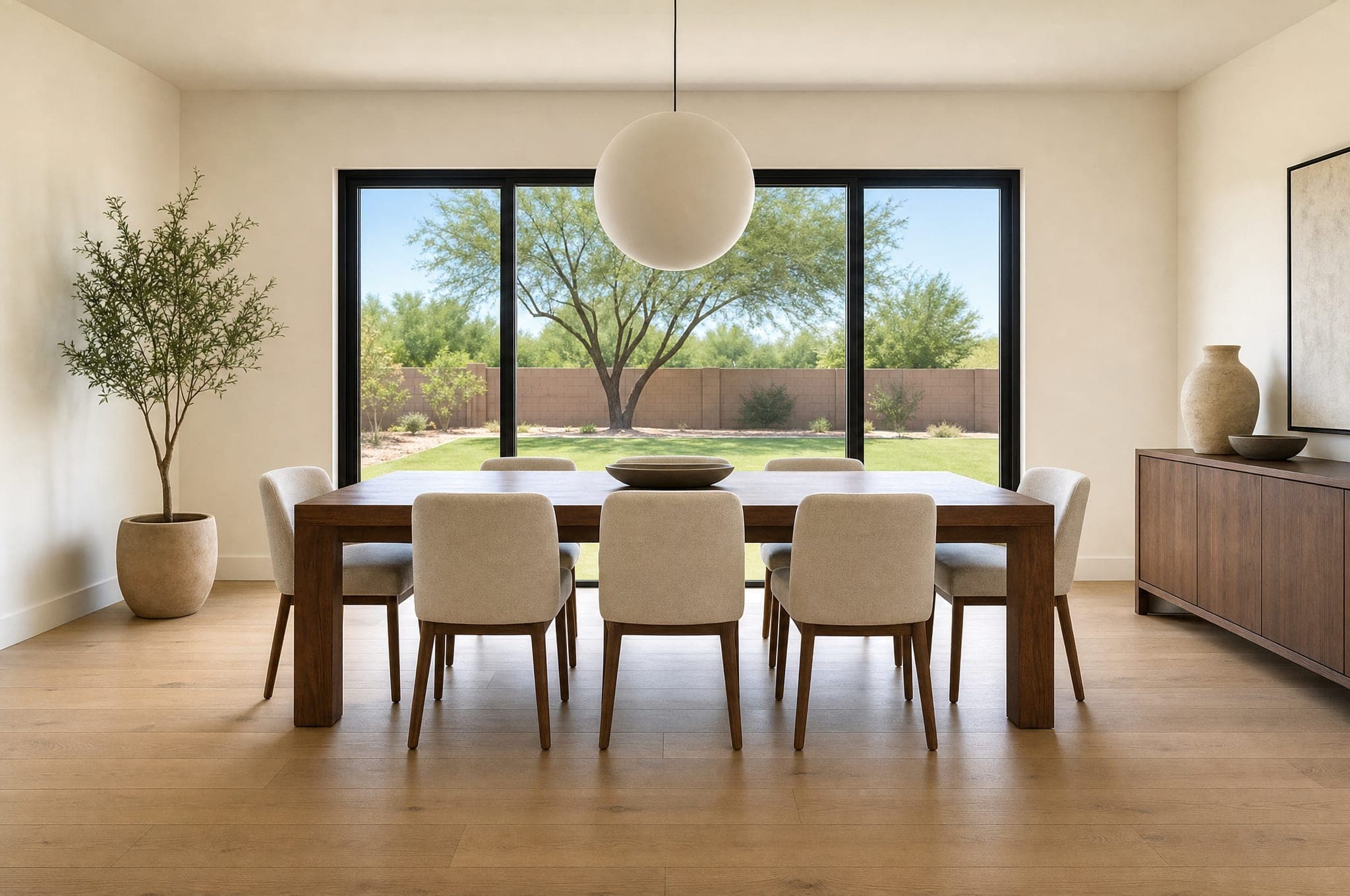
Solid vs. Engineered Hardwood
The first decision is construction, and in Arizona, it matters more than species.
Solid Hardwood
One piece of wood, top to bottom. It can be sanded and refinished many times over a lifetime, which is its great advantage. Its weakness here is dimensional movement: solid wood expands and contracts with humidity, and Phoenix-area indoor humidity regularly sits below 20%. Solid wood is best over a wood subfloor with careful humidity control, and we are candid about where it is (and is not) the right call in this climate.
Engineered Hardwood
A real wood veneer over a plywood or composite core. The cross-layered core resists the expansion and contraction that wrecks solid wood in desert homes, engineered floors can be installed over concrete slabs with the right adhesive and moisture mitigation, and quality products can still be refinished. For most Arizona slab homes, engineered hardwood is the professional recommendation, we explain the why in engineered hardwood for Arizona.
Species and Finishes We Carry
We work with a wide variety of wood flooring products from established mills, All American Flooring, Pinnacle, Kahrs, Ark Floors, Urban Floors, Red River, Hallmark, Anderson, Shaw, Mohawk, Armstrong, Longust, Gemwoods, and Reserve among them. White oak and hickory are East Valley favorites for hardness and grain character; walnut and maple suit cleaner, contemporary spaces.
You will also choose between:
- Site-finished: sanded, stained, and sealed in your home after installation. A perfectly seamless, custom-stained result at the cost of more on-site days and dust management.
- Prefinished: finished at the factory, installed and walkable almost immediately, with tougher factory-applied coatings. Most Arizona homeowners choose prefinished for speed and finish durability.
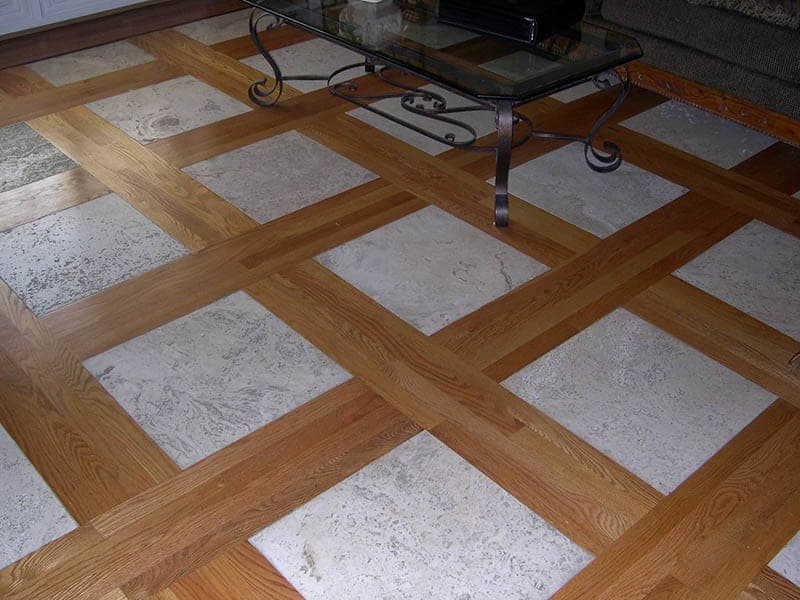
Stone and wood basket pattern 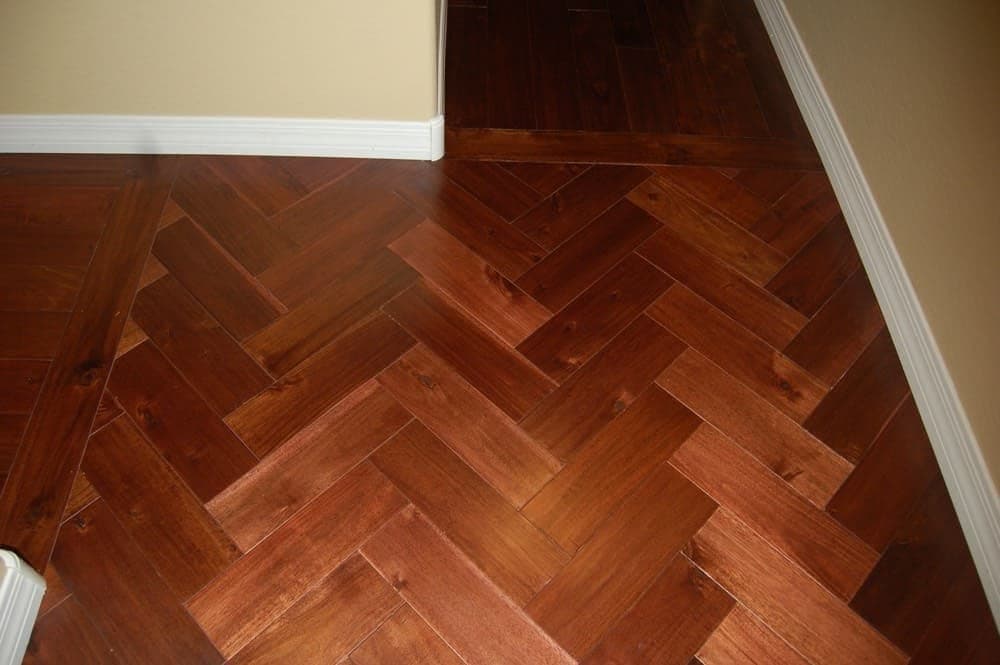
Acacia herringbone 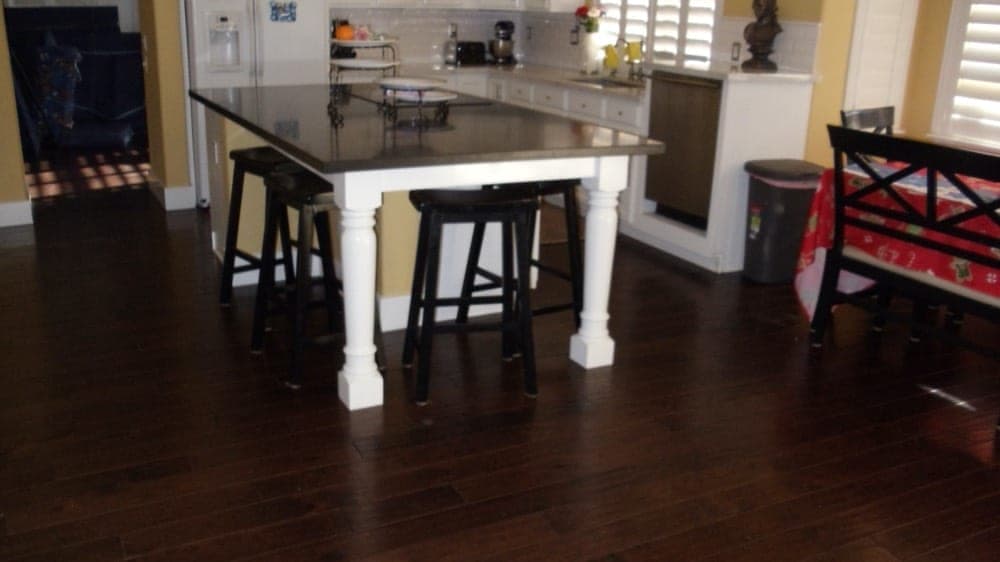
Hand-scraped cherry in a kitchen 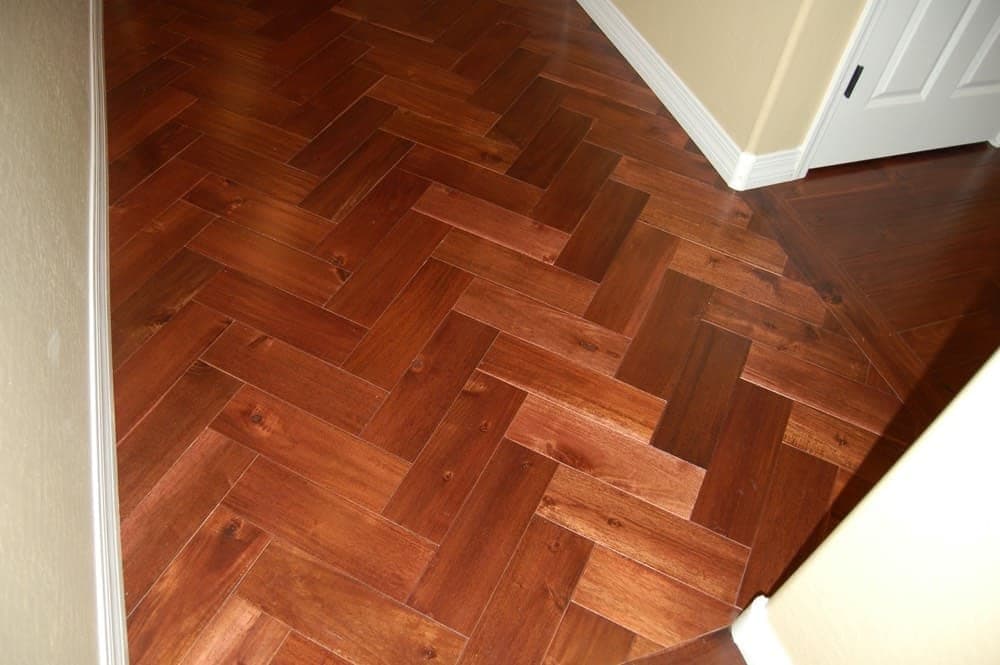
Herringbone with straight border
Which Arizona Homes Does Wood Flooring Suit?
- Main living areas and bedrooms where warmth underfoot and resale value matter most.
- Slab homes (with engineering). Nearly every East Valley home is slab-on-grade; engineered hardwood over slab (with moisture testing and the correct adhesive) is a routine job for us.
- Humidity-managed homes. If you run humidifiers through the driest months, solid wood becomes viable in more rooms. Expect the honest conversation at the estimate.
- Sun-exposed rooms. Direct desert sun can fade any wood; area rugs rotate, and window film helps. We will flag the exposures we see.
For rooms where water, pets, or pool traffic argue against wood entirely, we will say so and point you to waterproof flooring or laminate, see also what works best in Arizona's climate.
What to Consider Before Choosing Wood
- Construction first. Solid vs. engineered is a climate decision in Arizona, not just a budget one.
- Veneer thickness on engineered. Thicker veneers allow future refinishing; thin ones do not. Ask to see specs in writing.
- Hardness. Janka hardness ratings predict dent resistance, important with big dogs or heavy furniture.
- Acclimation. Wood must acclimate inside your home before installation; in our dry climate, skipping or rushing this step is the number one cause of gapping and movement later.
- Finish sheen. Matte and satin hides dust and scratches far better than gloss, a practical desert consideration.
What Affects the Price of Wood Flooring
Installed wood pricing depends on the material tier, total square footage, slab and subfloor prep, tear-out and disposal, furniture moving, and layout complexity, plus stain and finish choices on site-finished jobs. Your exact written number comes from our free in-home estimate; for a framework on how flooring costs build up, see flooring installation cost.
How East Valley Floors Installs Wood Flooring
Free in-home estimate
We measure, moisture-test the slab, evaluate sunlight and household traffic, and recommend solid or engineered with reasons.
Showroom selection
Compare species, grades, and finishes by appointment, and take samples home.
Acclimation
Wood sits inside your home until it reaches your home's moisture conditions, non-negotiable in a <20% humidity desert climate.
Prep and install
Slab prep, moisture mitigation where readings call for it, then nail-down, glue-down, or floating installation as the product and subfloor demand.
Walkthrough
Final inspection with you, plus care and humidity guidance for Arizona conditions.
Care and Maintenance
Sweep or vacuum the dust routinely (grit is wood's enemy), damp-mop sparingly with a wood-floor cleaner, and use felt pads under everything. In Arizona's dry air, stable indoor humidity (often a whole-home or room humidifier through winter) is the single best thing you can do for any wood floor. Wipe spills promptly; standing water and wood do not mix anywhere, desert included.
Wood Flooring FAQs
Is engineered hardwood good for Arizona's dry climate?
Yes, it is usually the best wood choice here. The cross-layered plywood core resists the shrinking and gapping that solid wood suffers below 20% indoor humidity, and it installs over the concrete slabs nearly all East Valley homes are built on. Combined with proper acclimation and reasonable humidity control, engineered hardwood performs beautifully in Chandler, Gilbert, and Mesa homes.
Can you put hardwood on a concrete slab in Arizona?
You can, with engineered hardwood and the right preparation. The slab gets a moisture test, elevated readings get mitigation, and the floor is glued down with the adhesive system the manufacturer specifies. Solid nail-down hardwood belongs over a wood subfloor. We assess your slab during the free in-home estimate and tell you exactly what it needs.
Do wood floors need to acclimate in Arizona?
Absolutely, arguably more here than anywhere. Wood arrives at a moisture content matched to somewhere wetter than Phoenix; installed without acclimating, it shrinks into gaps as it dries to your home's conditions. We let every wood floor acclimate inside your home until readings stabilize before the first plank goes down.
Is solid or engineered hardwood better for resale?
Both are real wood and both read as hardwood to buyers; engineered has shed its old stigma and is now standard in quality new builds. In Arizona, the "better" choice is usually the one installed correctly for the climate, a gap-free engineered floor beats a gapped solid one at any appraisal. We will help you pick the right product for the rooms you are selling.
Get a Free Wood Flooring Estimate
Real wood, done right, is a lifetime floor. See our wood installations in the project gallery or call (480) 926-3444 to schedule your free in-home estimate. Since 1984, East Valley Floors has installed only what we sell, so the floor, the finish, and the warranty all come from one accountable place.
Serving Chandler, Gilbert, Mesa, Tempe and Queen Creek. Mon-Fri, 7:00 AM-5:00 PM.