Skip to content
East Valley Floors: Carpet, Tile, Wood. Est. 1984

Tile and Stone Installation in Chandler, AZ

Tile and stone installation sets porcelain, ceramic, and natural stone (travertine, marble, granite, slate) over floors, showers, entries, and patios with proper substrate prep, layout, and sealing. East Valley Floors, a Chandler company since 1984, sells and installs tile and stone across Gilbert, Mesa, Tempe, and Queen Creek, handling everything from a kitchen backsplash to a whole-house travertine floor.
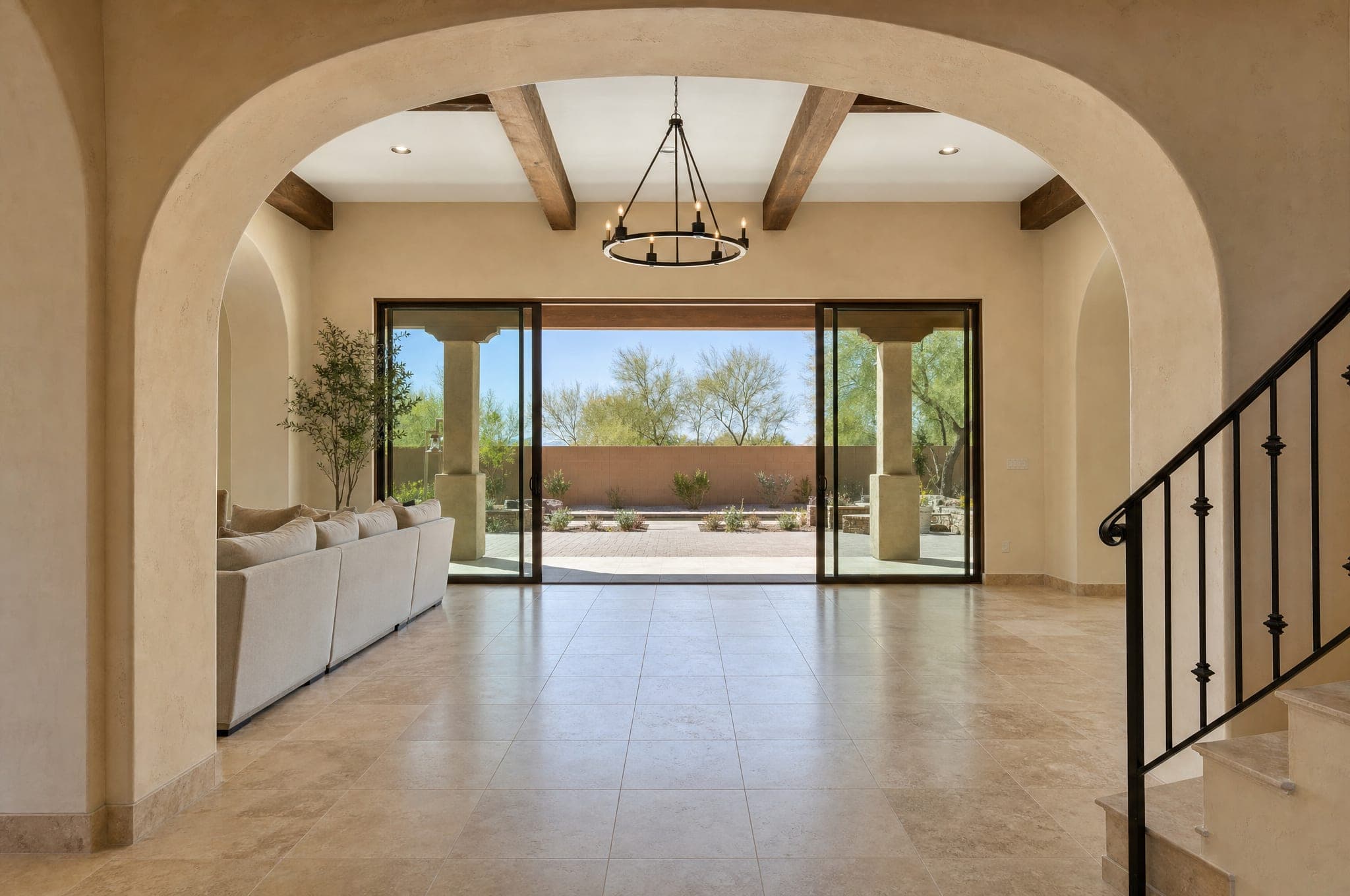
Great room with large beige travertine-look porcelain floor tile under a plaster archway, an iron chandelier and stair railing, and sliding doors to a covered patio
Design inspiration image, not a completed East Valley Floors project.

Tile and Stone Options We Install

Beautiful and timeless: the color and design of each individual piece of natural stone is unique, as designed by nature. Our showroom carries the full range:

Porcelain Tile

The workhorse of Arizona floors. Porcelain is denser than ceramic, with very low water absorption, so it works indoors, outdoors, and in showers. Large formats (12-by-24, 24-by-24 and bigger) give a clean, modern look with fewer grout lines to collect desert dust, and wood-look porcelain planks deliver the warmth of wood with tile's durability in the heat.
Ceramic Tile

Slightly softer and more affordable than porcelain, ceramic is a classic for bathrooms, backsplashes, and interior floors. Easier to cut and set, which can ease labor on intricate layouts.

Travertine

Arizona's signature stone. Travertine is a dense, closely compacted form of limestone, mostly white or cream colored calcium carbonate deposited by evaporating mineral water (the name comes from Tivoli, Italy; in the U.S. it forms around hot springs like Yellowstone's Mammoth). Its honed, tumbled, and unfilled finishes create everything from formal interiors to rustic, old-world floors, and it stays noticeably cooler underfoot than almost any other floor, a genuine asset through Chandler summers.

Marble and Granite

Marble and granite arrive from quarries all over the world. Granite is the harder of the two, which makes it ideal for countertops; both make stunning floors and entries where their polish and variation earn the upkeep.

Slate and Other Natural Stone

Slate originates in the U.S., India, and Africa, with a natural cleft that makes each piece slightly imperfect, part of its character. Limestone and travertine come smooth, or in unfilled and "tumbled" finishes with rounded, rustic edges. All natural stone is porous and should be sealed.

Saltillo and Mexican Terracotta

Saltillo clay tiles are crudely handmade, varying in size, shade, and texture from one to the next, occasionally even marked with animal tracks. Colors run terra-cotta to yellow to brown, and they can be ordered pre-sealed or sealed after installation.

Which Homes and Uses Suit Tile and Stone?

  • Heat-sensitive rooms. Tile stays cool underfoot, the natural answer for Arizona kitchens and west-facing spaces. See best flooring for Arizona's climate.
  • Entries and high-traffic zones. Porcelain shrugs off the grit and dust that blow in year-round.
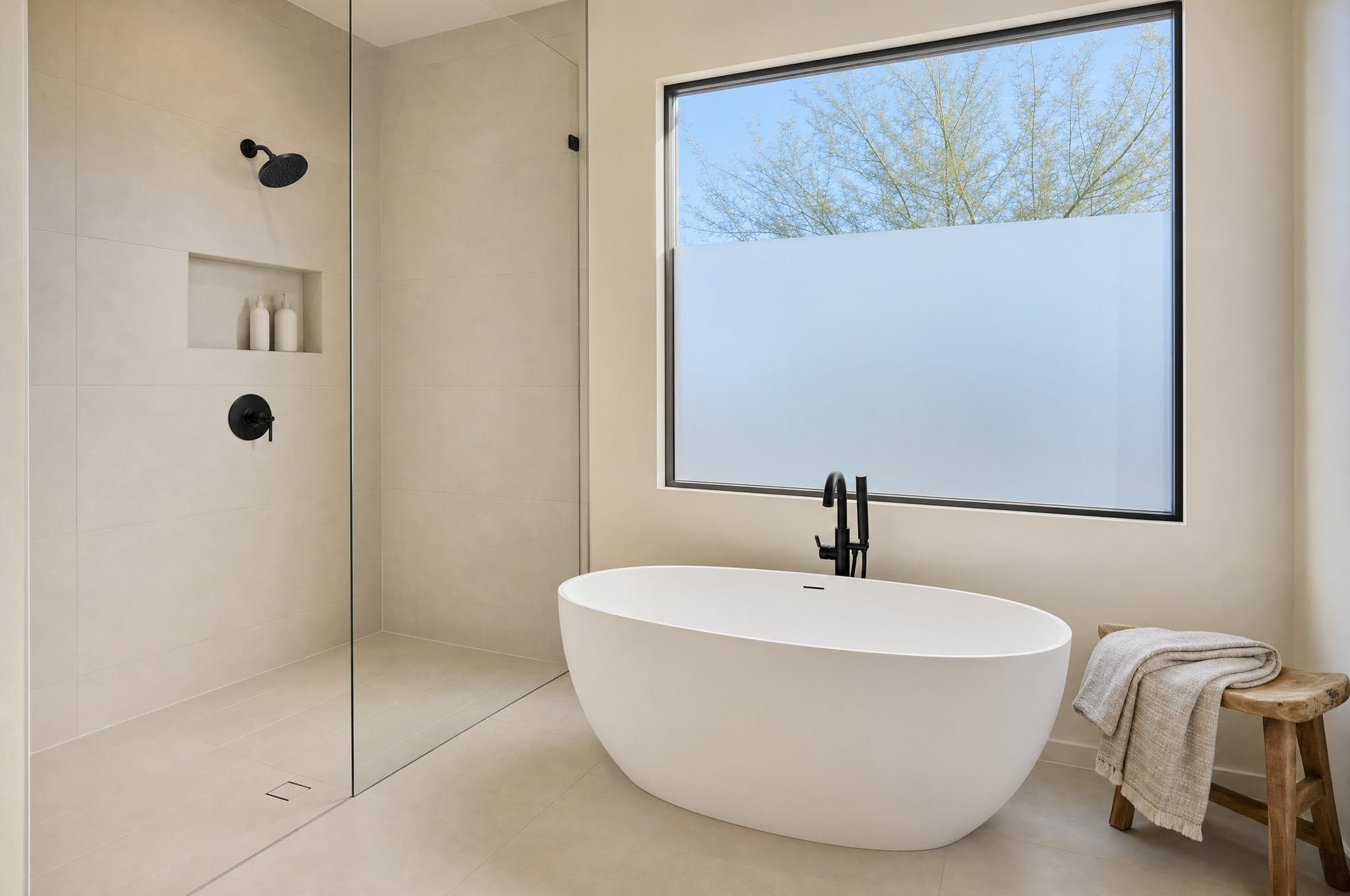
  • Showers and bathrooms. Waterproof by nature; see bathroom remodeling.
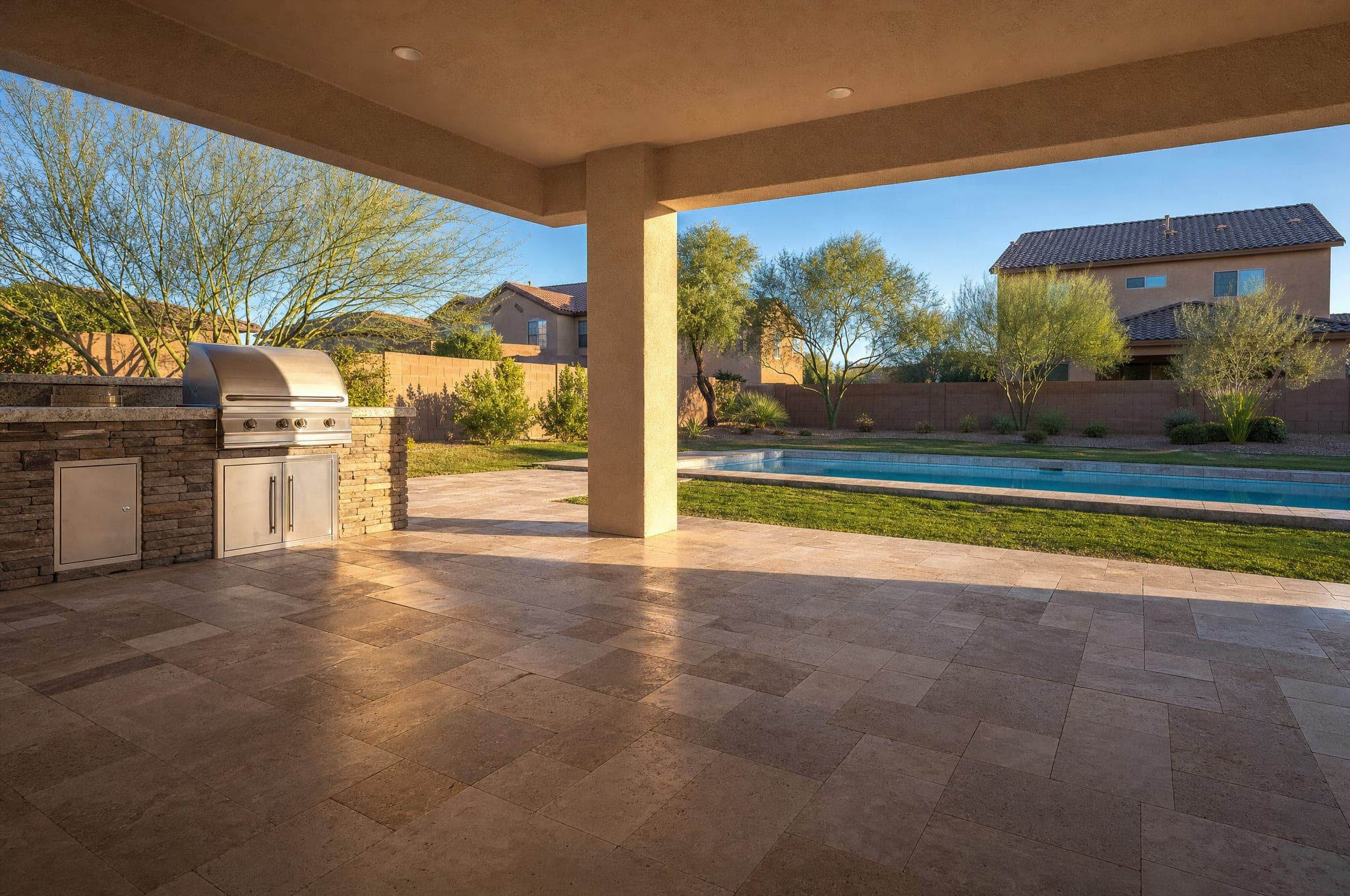
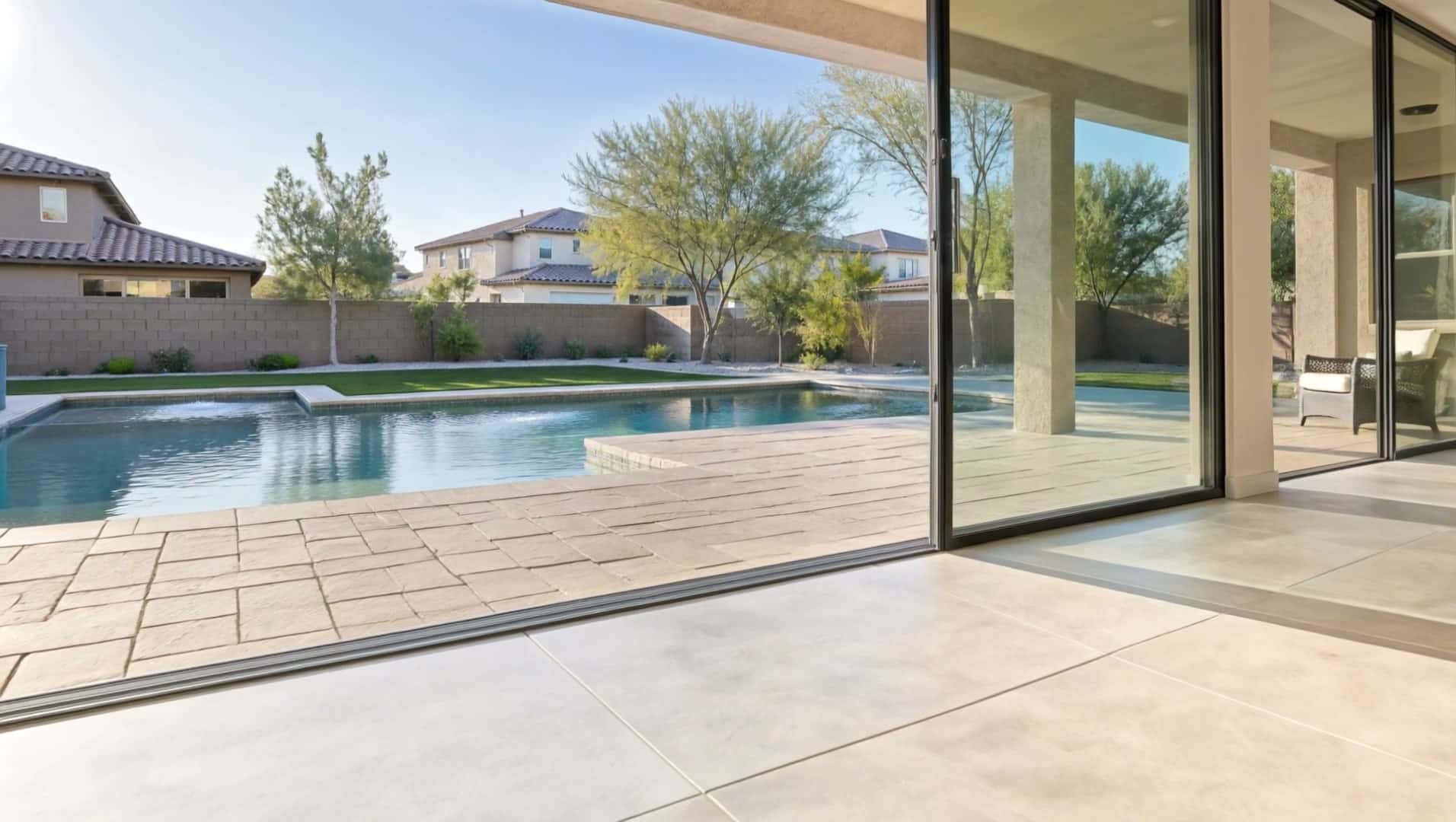
  • Patios and pool decks. Natural stone and porcelain belong outdoors here, no freeze-thaw, just heat, which stone handles beautifully. See exterior tile.
  • Formal spaces. Travertine, marble, and patterned layouts define foyers and dining rooms.
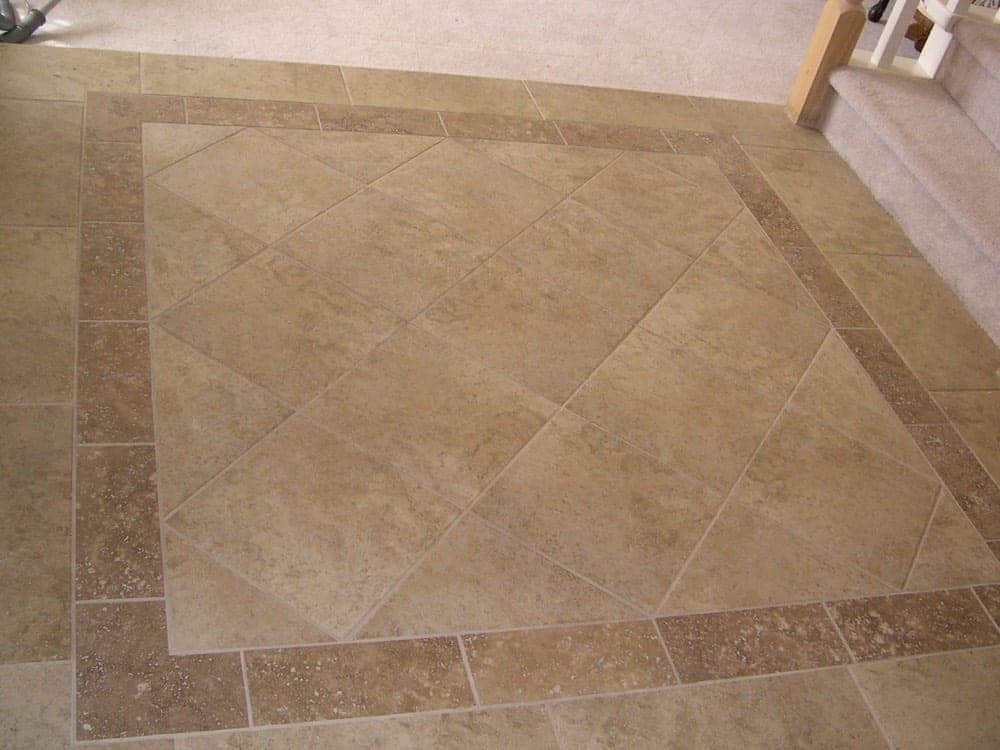
  • Foyer floor tile set with a framed border inlay
    Foyer tile with a framed border
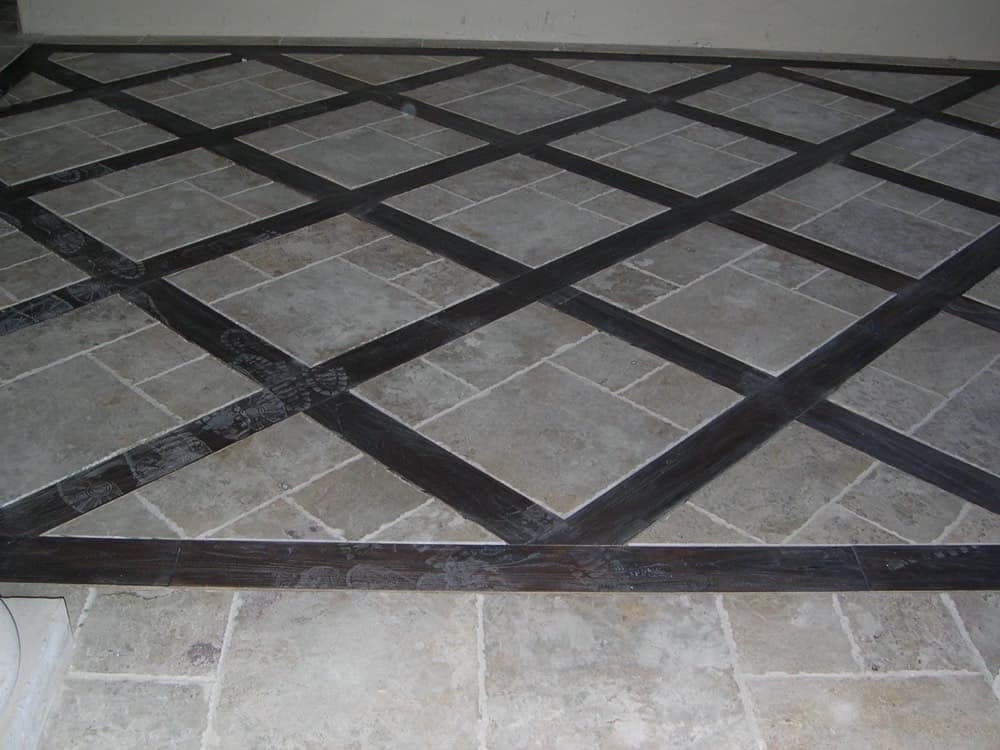
  • Mixed-material floor of stone tile and dark wood laid in a lattice grid
    Mixed-material lattice floor
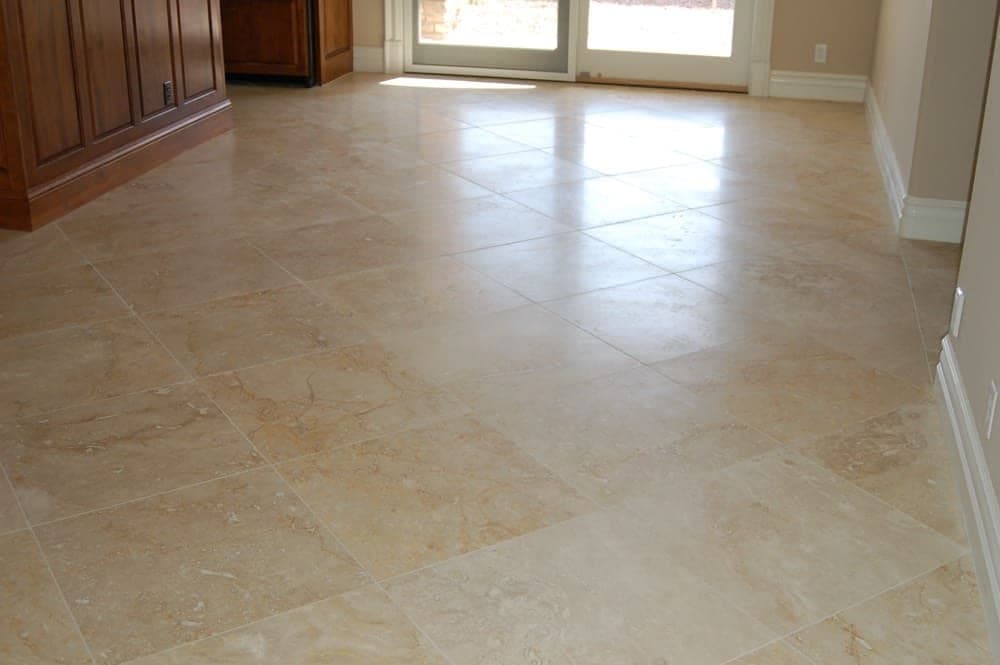
  • Polished travertine floor in a bright room with wood doors and tall windows
    Polished travertine great room
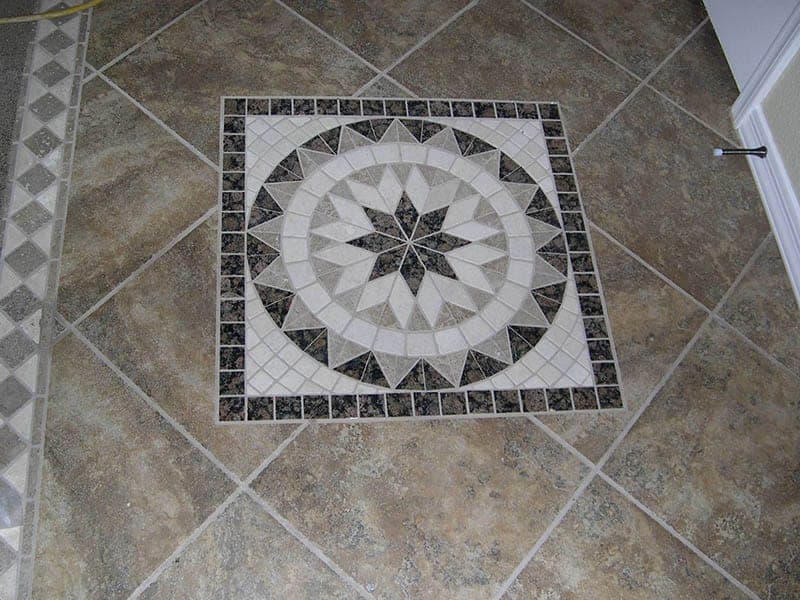
  • Stone tile medallion with a compass-star design set inside a diagonal border
    Compass-star medallion

See all tile & stone flooring projects

What to Consider Before Choosing

  • Interior, exterior, or both. Not every tile is rated for an Arizona patio's sun and heat, we confirm suitability before you buy.
  • Natural variation. No single sample represents a quarry's range; we help you review the full color and tone range of each product.
  • Slab flatness. Large-format tile demands a flat substrate; we assess and level Arizona slabs as needed.
  • Sealing and upkeep. Stone is porous and sealing is part of the job (below); travertine in particular dislikes oils and acidic spills.
  • Layout and pattern. Diagonal layouts, multi-size patterns, and medallions add material waste and labor but transform a room.

What Affects the Price of Tile and Stone

Honest tile pricing depends on your project, so we quote after measuring. The moving parts:

  • Material: porcelain vs. ceramic vs. natural stone, tile size (larger tiles cost more to buy and to install), and stone quality (cleaner, less-varied stone usually costs more; very splotchy crates run less).
  • Square footage and waste factor: pattern and tile size drive waste: plan roughly 4-5% for straight-lay tile up to 12 inches, 6-7% for 16-20 inch, 10-11% for 24 inch, plus about 5% more for diagonal layouts.
  • Subfloor and slab prep: leveling and crack isolation before a single tile is set.
  • Tear-out and disposal of existing flooring.
  • Sealing: not part of standard installation, but we do apply sealer to stone and grout (including color-staining existing grout) once the installation has cured.
  • Layout complexity: multiple sizes laid together raise both material waste and labor.

Your exact written number comes from the free in-home estimate. For context on how tile pricing works, see tile installation cost.

How East Valley Floors Installs Tile and Stone

  1. Free in-home estimate

    We measure, check slab flatness, and talk through material, layout, and sealing.

  2. Showroom selection

    Compare full tile ranges (with natural variation, not just a single sample) by appointment.

  3. Prep

    Tear-out, leveling, and any moisture or crack remediation.

  4. Installation

    Proper thinset coverage, layout from the room's focal point, and leveling clips on large formats to control lippage.

  5. Sealing

    After cure time, we apply sealer to stone and grout. We recommend professional sealing on new stone the first time; after that, maintenance sealing is straightforward.

Care and Maintenance

Sweep dust and grit regularly, then clean with a few drops of dish soap in warm water using a cloth, sponge, or mop; rinse and dry. Do not use abrasive cleaners (Ajax, Comet) or anything acidic (lemon, orange, vinegar) on natural stone. Apply sealer, especially to countertops, about every year to prevent deep staining; on a new installation, seal in the first week after grout. We do not recommend sealing exterior travertine.

Tile and Stone FAQs

Is travertine or porcelain better for an Arizona home?

Both excel here, differently. Travertine is natural, stays cool, and delivers an unmatched high-end look, but it is porous, needs sealing, and is sensitive to acids and oils. Porcelain is nearly maintenance-free, tougher, and cheaper to own, with convincing stone looks. For busy family floors many East Valley homeowners choose porcelain; for formal living spaces, travertine wins hearts.

Does travertine need to be sealed in Arizona?

Yes. All natural stone is porous, and Arizona dust plus hard water make sealing even more worthwhile indoors. We apply sealer to stone and grout after the installation cures (a first professional application is recommended) then roughly annual resealing for countertops and high-use floors. Exterior travertine is the exception: we do not recommend sealing it.

Can tile be installed outdoors in Arizona?

Absolutely, the lack of freeze-thaw makes Arizona ideal for exterior tile and stone. Patios, pool decks, entries, and walkways in travertine, slate, or exterior-rated porcelain are among our signature projects. The keys are exterior-rated material, a proper base, and correct drainage, see our exterior tile page.

How much extra tile should I order?

Waste depends on tile size and layout: about 4-5% over measured area for straight-lay tile up to 12 inches, 6-7% for 16-20 inch, 10-11% for 24 inch, then add roughly 5% for diagonal installations. Multiple sizes laid together raise both waste and labor. We build the waste factor into your estimate so you are not short, or sitting on extra crates.

Get a Free Tile and Stone Estimate

From a single backsplash to a whole-house travertine installation, East Valley Floors has set tile and stone across the East Valley since 1984. See the work in our tile and stone gallery or call (480) 926-3444 for a free in-home estimate.

Serving Chandler, Gilbert, Mesa, Tempe and Queen Creek. Mon-Fri, 7:00 AM-5:00 PM.